
Our Blog
The Preborn Christ: A Spirituality
September 20, 2023
0 Comment
This is the beginning of a series of posts that will provide a basic and complete understanding of the spirituality of a Bearer of the Preborn Christ. This will come in small pieces through the blog, while it will develop with the accumulation of each piece to a whole of all pieces combined on a single webpage
Part One
Introduction
“…it is in dying that we are born into eternal life.” Although this last line from the Peace Prayer of Saint Francis is not believed to have been written by St. Francis, it has been embraced as capturing his spirit.1 This line highlights his perspective on mortal life as a womb where we are perfected in charity for eternal life. As eternal life and happiness with God should be the goal of everyone, Francis devoted the last half of his life to his perfection in charity. He did this by seeking to imitate the earthly life of Jesus Christ as closely as he could. In his often-dramatic fashion, Francis acted in a manner that would impress upon himself a virtue or truth about Jesus by living it himself. In this manner, he grew and developed his faith in God, preparing himself for eternal life. That he viewed it as a womb gives us a glimpse into Francis’s mostly hidden spiritual life that this study may help illuminate for us to share.
Peace of Jesus in the womb of Mary be with you.
1. Bodo OFM, Murray, “A Look at the Peace Prayer of St. Francis,” Franciscan Media, Dec 30, 2020. https://www.franciscanmedia.org/franciscan-spirit-blog/a-look-at-the-peace-prayer-of-st-francis
“Invisible to the World, The Babies Die So Tragically Alone”
A Labor Day statement from recently incarcerated William Goodman.
I am blessed to have a narrow 2-inch-long window by which to see the blue sky. Deo gratias. It’s Labor Day weekend, and it seems I am right where God wants me to be, even if it’s not so much where I wanted to be.
In some ways a jail cell is like a womb in that it is a place of confinement, hope and waiting. You are in the dark regarding all that’s happening in the world. Far away from the action. But you are close to God despite the times of feeling alone. It can be a place of life and growth. It may sound strange, but in some ways I feel closer to my persecuted preborn sisters and brothers here than almost anywhere (save maybe for in a church during the Liturgy or inside a fully operational killing facility).
The jail retreat makes you feel invisible to the world. Helpless and absent. Separated. Muted. It makes me mourn the many tens of thousands of little ones who die alone. And helpless. And separated. Their tiny cries muted. Dying at abortion chambers where all humanity is utterly absent.
These heavy thoughts haunt me constantly here. I am heartbroken over how tragically alone God’s children are inside these killing facilities.  And yet, I am more convinced than ever for the need of rescue and this particular gift of self – which one offers to the perishing – as also a personal presence of peace and conscience to the parents at the last moment.
Rescue is a truthful witness of love, before love comes too late, with the hope that love will conquer selfishness and fear. It is also a witness of nonviolence in a place of awful violence. A witness to hope in the gallows of despair. Rescuers seek to join Christ the Divine Rescuer Who is the Light of Hope.
I suppose there’s a certain fittingness for rescuers to be incarcerated over Labor Day weekend. A witness of good against evil is our labor. And our small gift of loving reparation.
Will Goodman has been found guilty of conspiracy against rights and violation of the Freedom of Access to Clinic Entrances (FACE) Act for blocking access to late-term abortionist Cesare Santangelo’s Washington Surgi-Clinic in downtown Washington, D.C., in October 2020.
Peace of Jesus in the womb of Mary be with you.
Pro-Life Contentious Objectors Facing a Possible Eleven Years of Imprisonment Ask You to Forgive Their Persecutors
Please “. . . forgive the jury, the judge, and all those who witnessed against us, and to pray that they would see how God loves the gift of every human life,”[1] is the request of the just convicted William Goodman facing a possible eleven years of federal imprisonment and a $300,000 for violating the FACE Act (Freedom of Clinic Access Act) intended to protect abortion from contentious objection.
The profilers sought to protect persons in the womb from abortionist Cesare Santangelo, who is filmed acknowledging the law that requires him to render medical care to a person who is born-alive from a failed abortion, but that he would not and instead let that person die from neglect. Abortionist Santangelo stated it plainly when he was recorded by LiveAction.org saying, “We would not help it.”[2]
The preborn person, existing first as an idea in the Creator’s mind, is brought to the Washington Surgi-Clinic abortion center to be surgically destroyed. The preborn person is a complete human being capable of feeling pain and with a heartbeat and brain waves.
Rescue those who are being taken away to death;
hold back those who are stumbling to the slaughter. Proverbs 24:11 RSV
Some of those charged were sitting in the center’s waiting room while encouraging the abortion-bound mothers to save their children from abortion. The others were arrested while standing in the outside hallway. This action is known in prolife circles as a ‘rescue’ because it is an intended action that has proven to affect many mothers to change their minds and save their baby from abortion.
In common law, if one must violate a lesser law to achieve a higher good, the violation of the lesser law is excused for the higher good. If one, when entering a burning house to rescue a human being who otherwise would not get alive, trespasses to save the life, the courts excuse the trespass for the higher good of saving a human life. This concept is known as the ‘necessity defense’ and is a long and hallowed legal defense in civilized societies. The court has denied the pro-lifers from raising this ‘necessity defense’ or any other related defense of themselves from these criminal charges.
In total, ten were charged with having a role in a sit-in at the Washington Surgi-Center in DC on October 20, 2020. They were arrested and indicted on March 31, 2022. Five were tried over the past three weeks and were found guilty. These guilty verdicts were unsurprising as the judge denied the defendants the ‘necessity defense’ or anything related to it. Three others will be tried for the same charges beginning today. A final defendant faces trial beginning on October 23, 2023. A tenth defendant, inexperienced with acts of conscientious objection such as a rescue and offered the prospect of a maximum of ten months of incarceration, pled guilty earlier.
A quick breakdown of the charges that may lead to an unprecedented threat of eleven (11) years in federal prison with accompanying fines are:
- Incarceration for up to one year in federal prison for violating the Freedom of Access to Clinic Entrance Act (FACE) that prohibits threats of force, obstruction, and property damage intended to interfere with reproductive health care service (a euphemism for abortion).
- Incarceration for up to ten years in federal prison for “conspiracy to interfere with civil rights.” In the fifty years of active contentious objection since Roe V. Wade unleashed unrestricted abortion in our country, the prosecutors have never sought such draconian penalties.
“We hold these truths to be self-evident, that all men are created equal, that they are endowed by their Creator with certain unalienable Rights, that among these are Life, Liberty and the pursuit of Happiness.” is from the Declaration of Independence’s preamble.
Life is a self-evident, inalienable right of all human beings created. Because abortion unjustly takes the life of the preborn person, it is neither a constitutional nor a civil right of anyone’s. Akin to the defense of slavery in our past, the preborn person is neither recognized as a person in our courts and, accordingly, nor is recognized as having the rights of life, liberty, or the pursuit of happiness.
When the right to life is denied, it is not the denial of one right; rather, it is the denial of all rights. St. Pope John Paul II stated this principle when he wrote, “Above all, the common outcry, which is justly made on behalf of human rights, for example, the right to health, to home, to work, to family, to culture- is false and illusory if the right to life, the most basic and fundamental right and the condition for all other personal rights, is not defended with maximum determination.”[3]
These contentious objectors, or Rescuers of the preborn, are prepared to accept the solidarity with the alienated preborn. As Joan Andrews Bell, one of the defendants, has been saying for decades, “You reject them, you reject me.”[4]
Aside from being a creative use of the law by Merrick Garland’s and Joseph Biden’s Department of Justice, these charges and penalties are cruelly punitive. They are meant to punish the contentious objector and send a message to us not to even consider following their attitude, much less their action.
Contraception/Abortion has become a structure of sin in our culture. It is tolerated, accommodated, and promoted as a good for all. The unrepentant sin of individuals has accumulated to a body reaching in and corrupting all aspects of our society, i.e., marriage, the family, courtship, medicine, law and justice, insurance, education, entertainment, and foreign aid, to name a few. Even the Church and its teachings are severely challenged by these unrepentant sins.
Just this past week, the American College of Obstetricians and Gynecologists, which had for decades offered qualified acceptance of abortion, just came out for unrestricted abortion.[5]
May we also take into prayer and fasting the systemic alienation from the preborn that society has promoted. Ask God what else he may be asking from you to transform our minds to God’s counsel and our love for these families threatened by abortion.
May we meet in prayer under His Cross.
Jesus Christ – The Difference Between Jesus and Christ
Jesus is known as the second person of God in the Most Blessed Holy Trinity. He is also mankind’s cause and medium through which we find salvation with God the Father and live eternity participating in the life of the Holy Trinity. It is Jesus, being of God’s substance and Divine nature, who assumed human nature in the complete sense of having the composite of human life of both a soul/spirit and body. He lived a perfect human life after emptying Himself of relying on the Divine nature for grace any more than is available as recourse to any other human through prayer and trust in the Father’s Divine Providence. He is God showing us the way through His example in life, through His passion, in death, in Resurrection, in His Resurrection, and through His eternal intercession on our behalf.
The name Christ is best understood as the Church being its body with Jesus as the head. [Col 1:18] It is through Baptism that all Christians become members of the Church and, in turn, members of the Body of Christ. As practicing members of the Church and Body of Christ, Christians surrender themselves to the reign of the head, Jesus. Jesus is “the Way, the Truth, and the Life.” [ John 14:6 ] All of creation was made subject to futility, but not without hope. Jesus, our head individually and of the Church, leads us to be free from sin as children of God. [ cf. Romans 8:20-21 ]
All things were created through Jesus, who existed before all things, and it is through Him all things hold together. [ Cf. Romans 8:16-17 ] It is also through him that all will be reconciled for Him. [ Romans 8:20 ]
The name Jesus, in Hebrew, means “God saves.” [ CCC 430 ] The name Christ is the Greek translation of the Hebrew word Messiah meaning “anointed.” [ CCC 436 ] Jesus was anointed with the Spirit, who is the anointing. It is with this same Holy Spirit that each Christian is anointed at Baptism. The Holy Spirit prepares the Christian as a Temple to receive the conception of Jesus so that we may bear Jesus in both the word and sacrament. Through both, the Christian surrenders to the reign of Jesus as our head.
The question for the Christian to answer is, “Are you responding , in surrender to Jesus our head, His own words, ‘This is my body, I give it up for you.’”
Peace of Jesus in the womb of Mary be with you.
May 9th, The 63rd Anniversary of “The Pill”
Above photo: One of the buildings where the pill was invented in Shrewsbury, MA, prior to approval by the FDA on May 9, 1960.
May 9th is such an ordinary day. It is neither a national holiday nor a day of religious significance. It is just another spring day leading toward summer, with green returning to trees and bushes alike, flowers offer their first bloom, and Little League baseball returns to the local diamond. Highlights of the day may include graduation ceremonies at various schools, while ballrooms may include junior and senior proms.
May 9th is also the anniversary of the contraceptive Pill (The Pill), approved as birth control by the United States Food and Drug Administration (FDA). It was invented in Shrewsbury, MA, at the Worcester Foundation for Experimental Biology. The Pill is possibly today’s most prescribed pharmaceutical, while the women prescribed The Pill are also likely the least informed in terms of the effects and dangers of this pharmaceutical. Considering that the Pill has been tried by as many as 94% of women for over sixty years, with them having little forehand knowledge, there has also been meager public discussion on its impact on the culture and its merits or failings.
To an unchallenged populace, The Pill represents control over reproduction with the promise of a better life. It’s timing of invention was some fifteen years after the technology of the atomic bomb was seen as having brought the end of hostilities by Japan without sacrificing many soldiers of the United States and its allies. Technology, it was argued, saves lives. The technological imperative was seen to serve the human imperative.
It seems that for many, only experience with artificial contraception affords the opening of the user’s mind to the disappointments entreated on the user. These disappointments manifest in the body, the emotions, and the spirit. Couples often say that pregnancy changes everything. Artificial contraception changes everything, too, but for the worse, with its distortions of truth.
The failings of artificial contraception are as varied as are the harmful consequences to the human person. These failings can even be deadly. To properly and fully document these failings to the individual by these contraceptives will require time and dedication on this website, going far beyond the scope of a single blog post. Look for follow-ups to come.
It is just as important to consider the resultant structures of sin that have changed a culture striving for a higher humanity where right makes might to the more animalistic might makes right.
Can this be attributed to the adoption and acceptance of artificial contraception alone? It is more likely weak faith formation and the temptation “to be like Gods” that all new technologies manifest is a more likely explanation. [NAB Genesis 3:5]
Experience of sin, such as turning to artificial contraception, can enlighten one to the truth, but usually only after a period of sorting out the consequences of sin:
1) Confusion of the intellect;
2) Malice of will;
3) Disorder of emotions and passions; and
4) Weakness, sickness, and death of the spirit and body.
We, Bearers of the Preborn Christ, believe that full knowledge of artificial contraception, properly presented, can spare many people from falling into this practice while others may overcome the resulting negative consequences from contraceptive practice with practicing the virtues of:
1) prudence;
2) justice;
3) temperance; and
4) fortitude.
Reliable knowledge of and the distortions of truth associated with artificial contraception to the individual and in culture will be a point of an ongoing study in this blog and website, and death of the spirit and body.
Peace of Jesus in the womb of Mary be with you.
A Communion Prayer
December 25, 2025 Patrick A. O’Donnell 71 comments
By Patrick A. O’Donnell December 25, 2025
Preborn Christ Spirituality
Introduction
The following prayer seeks a fruitful union with Jesus—through the Word and through the Sacraments. It asks for a meaningful integration of Christ into one’s life, which necessarily involves a willingness to change. To receive Jesus is not merely to welcome Him inwardly, but to make room for Him, to adjust one’s life to accommodate His presence, and to surrender one’s will to His Will.
Scripture speaks of Christ being formed within us (cf. Galatians 4:19). This prayer draws upon the image of spiritual conception and growth. Just as a pregnant mother must answer truthfully—even to herself—when asked if she is pregnant, “Yes, I am bearing another,” so the Christian must eventually ask: Am I now showing? Is Christ becoming visible in my life?
This prayer is a plea for that grace: not only to receive Christ, but to bear Him, nurture Him, and allow Him to be made manifest for the life of the world.
Prayer for Communion by Word or Sacrament
Seed,
Word that can save souls,
I humbly welcome You into my body.
(cf. James 1:21)
This body is not mine; it is Yours.
You have purchased it at the price of Your blood.
(cf. 1 Corinthians 6:20)
I surrender my body to You
as a living sacrifice,
holy and pleasing to God,
(cf. Romans 12:1)
as a temple of the Holy Spirit.
(cf. 1 Corinthians 6:19)
May I receive You, Jesus;
that I may conceive You, Jesus;
that I may bear You, Jesus;
that I may nurture You, Jesus.
With the labor of Mary and Your Church,
may You, Jesus, be formed within me.
(cf. Galatians 4:19)
May the two of us—You, Jesus, and I—
become one within this body of mine,
(cf. Genesis 2:24)
that I may put on the mind of Christ,
(cf. Philippians 2:5)
that You may increase and I may decrease.
(cf. John 3:30)
May I die with You,
so that I may live within You, Jesus.
(cf. Romans 6:8; 2 Timothy 2:11)
Having died,
may it no longer be I who live,
but You who live within me.
(cf. Galatians 2:19–20)
May my life remain hidden with You, Jesus.
(cf. Colossians 3:3)
May Christ be made manifest in this body.
(cf. 1 Timothy 3:16)
May I remain in You, and You in me,
that we may bear much fruit.
(cf. John 15:5)
In this body,
may I complete what is lacking
in the sufferings of Christ,
on behalf of His Body, the Church.
(cf. Colossians 1:24)
May I present Christ to others,
while seeing only Christ in the other,
as I serve Christ—
building the Body of Christ in this world.
Through Jesus,
may I participate in the life and love
of the Blessed Trinity
here in this world
and in eternal life in Heaven.
Amen.
By Patrick A. O’Donnell December 25, 2025
Concluding Reflection / Call to Prayer
To receive Christ is never a static moment—it is the beginning of a transformation. Communion, whether through the Word or the Sacrament, calls us not only to welcome Jesus inwardly, but to allow Him to grow, mature, and become visible through us.
As you pray this prayer, consider asking honestly: Where am I making room for Christ—and where am I resisting the changes His presence requires? May this prayer draw you into deeper surrender, deeper union, and a life that truly bears Christ for the sake of the world.
May the peace of Jesus in the womb of Mary be with you.
A Holy Advent
December 3, 2023 Patrick A. O’Donnell 35 comments
Advent is a time of preparing for that which we already have. We await Christmas Day, the revelation of Jesus, who had been physically conceived nine months previous, the Feast of the Incarnation. God revealed himself in the flesh of Mary as a separate person who lay in the manger on the first Christmas Day. We seek to reveal Christ in our flesh this coming Christmas Day. Have we taken on the mind of Christ? Are we now prepared to say, “This is my body; I give it to you,” to Jesus within ourselves?
If not, why not?
If it is because of unrepentant sin that you carry, Advent is also a period of penance and reparation. This is a perfect time, an acceptable time to examine one’s own conscience and apologize with the hope of forgiveness through absolution for any present unrepentant sin. Upon completing one’s penance and reconciliation, one can begin the process of self-examination anew. Such a second examination of conscience that begins at the graced moment of completion of the reconciliation process, given sufficient time, can often lead to a follow-up, much deeper and profound reconciliation. Yes, this is a suggestion that you plan on seeking the Sacrament of Reconciliation on two occasions before Christmas. This is a short Advent so two occasions requires seeking the Sacrament this week and a second maybe two weeks hence.
It is up to each person to decide for oneself if this Advent will be a typical period of material preparation for Christmas or a truly new beginning for your relationship with Jesus, the Holy Spirit, and ultimately with the Father. Many churches enrich the Advent season with the offer of extra opportunities for the Sacrament of Reconciliation, often with added evening opportunities to seek reconciliation through the Sacrament.
Jesus Christ is waiting with graces for you to make this a Holy Season for yourself. Don’t let yourself miss this opportunity. For this Christmas, be at least as spiritually prepared for Jesus on Christmas Day as you are so often materially ready.
May the peace of Christ in the womb of Mary be with you.
© 2023 Patrick A. O’Donnell All Rights Reserved
THE PREBORN CHRIST: A SPIRITUALITY
September 20, 2023 Patrick A. O’Donnell 38 comments
This is the beginning of a series of posts that will be provide a basic and complete understanding of the spirituality of a Bearer of the Preborn Christ. This will come in small pieces through the blog while it will develop with the accumulation of each piece to a whole of all pieces combined on a single webpage.
Part One
Introduction
“…it is in dying that we are born into eternal life.” Although this last line from the Peace Prayer of Saint Francis is not believed to have been written by St. Francis, it has been embraced as capturing his spirit.1 This line highlights his perspective on mortal life as a womb where we are perfected in charity for eternal life. As eternal life and happiness with God should be the goal of everyone, Francis devoted the last half of his life to his perfection in charity. He did this by seeking to imitate the earthly life of Jesus Christ as closely as he could. In his often-dramatic fashion, Francis acted in a manner that would impress upon himself a virtue or truth about Jesus by living it himself. In this manner, he grew and developed his faith in God, preparing himself for eternal life. That he viewed it as a womb gives us a glimpse into Francis’s mostly hidden spiritual life that this study may help illuminate for us to share.
Peace of Jesus in the womb of Mary be with you.
1 Bodo OFM, Murray, A Look at the Peace Prayer of St. Francis, Franciscan Media.org, Dec 30, 2020. https://www.franciscanmedia.org/franciscan-spirit-blog/a-look-at-the-peace-prayer-of-st-francis
© 2023 Patrick A. O’Donnell All Rights Reserved
“INVISIBLE TO THE WORLD, THE BABIES DIE SO TRAGICALLY ALONE”
September 6, 2023 Patrick A. O’Donnell 50 comments
A Labor Day Statement from recently incarcerated William Goodman
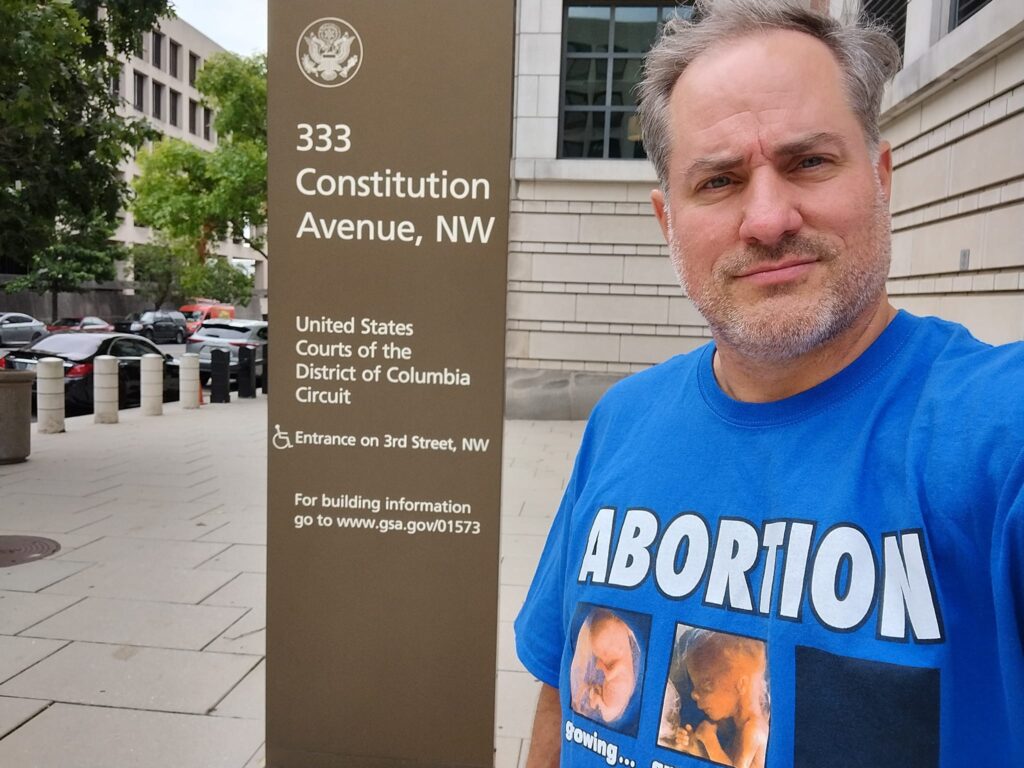
I am blessed to have a narrow 2-inch-long window by which to see the blue sky. Deo gratias. It’s Labor Day weekend, and it seems I am right where God wants me to be, even if it’s not so much where I wanted to be.
In some ways a jail cell is like a womb in that it is a place of confinement, hope and waiting. You are in the dark regarding all that’s happening in the world. Far away from the action. But you are close to God despite the times of feeling alone. It can be a place of life and growth. It may sound strange, but in some ways I feel closer to my persecuted preborn sisters and brothers here than almost anywhere (save maybe for in a church during the Liturgy or inside a fully operational killing facility).
The jail retreat makes you feel invisible to the world. Helpless and absent. Separated. Muted. It makes me mourn the many tens of thousands of little ones who die alone. And helpless. And separated. Their tiny cries muted. Dying at abortion chambers where all humanity is utterly absent.
These heavy thoughts haunt me constantly here. I am heartbroken over how tragically alone God’s children are inside these killing facilities. And yet, I am more convinced than ever for the need of rescue and this particular gift of self – which one offers to the perishing – as also a personal presence of peace and conscience to the parents at the last moment.
Rescue is a truthful witness of love, before love comes too late, with the hope that love will conquer selfishness and fear. It is also a witness of nonviolence in a place of awful violence. A witness to hope in the gallows of despair. Rescuers seek to join Christ the Divine Rescuer Who is the Light of Hope.
I suppose there’s a certain fittingness for rescuers to be incarcerated over Labor Day weekend. A witness of good against evil is our labor. And our small gift of loving reparation.
Will Goodman has been found guilt of conspiracy against rights and violation of the Freedom of Access to Clinic Entrances (FACE) Act for blocking access to late-term abortionist Cesare Santangelo’s Washington Surgi-Clinic in downtown Washington, D.C. in October 2020.
Peace of Jesus in the womb of Mary be with you.
© 2023 Patrick A. O’Donnell All Rights Reserved
PRO-LIFE CONTENTIOUS OBJECTORS FACING A POSSIBLE ELEVEN YEARS OF IMPRISONMENT ASK YOU TO FORGIVE THEIR PERSECUTORS
September 6, 2023 Patrick A. O’Donnell 50 comments

Please “. . . forgive the jury, the judge, and all those who witnessed against us, and to pray that they would see how God loves the gift of every human life,”[1] is the request of the just convicted William Goodman facing a possible eleven years of federal imprisonment and a $300,000 for violating the FACE Act (Freedom of Clinic Access Act) intended to protect abortion from contentious objection.
The profilers sought to protect persons in the womb from abortionist Cesare Santangelo, who is filmed acknowledging the law that requires him to render medical care to a person who is born-alive from a failed abortion, but that he would not and instead let that person die from neglect. Abortionist Santangelo stated it plainly when he was recorded by LiveAction.org saying, “We would not help it.”[2]
The preborn person, existing first as an idea in the Creator’s mind, is brought to the Washington Surgi-Clinic abortion center to be surgically destroyed. The preborn person is a complete human being capable of feeling pain and with a heartbeat and brain waves.
Rescue those who are being taken away to death;
hold back those who are stumbling to the slaughter. Proverbs 24:11 RSV
Some of those charged were sitting in the center’s waiting room while encouraging the abortion-bound mothers to save their children from abortion. The others were arrested while standing in the outside hallway. This action is known in prolife circles as a ‘rescue’ because it is an intended action that has proven to affect many mothers to change their minds and save their baby from abortion.
In common law, if one must violate a lesser law to achieve a higher good, the violation of the lesser law is excused for the higher good. If one, when entering a burning house to rescue a human being who otherwise would not get alive, trespasses to save the life, the courts excuse the trespass for the higher good of saving a human life. This concept is known as the ‘necessity defense’ and is a long and hallowed legal defense in civilized societies. The court has denied the pro-lifers from raising this ‘necessity defense’ or any other related defense of themselves from these criminal charges.
In total, ten were charged with having a role in a sit-in at the Washington Surgi-Center in DC on October 20, 2020. They were arrested and indicted on March 31, 2022. Five were tried over the past three weeks and were found guilty. These guilty verdicts were unsurprising as the judge denied the defendants the ‘necessity defense’ or anything related to it. Three others will be tried for the same charges beginning today. A final defendant faces trial beginning on October 23, 2023. A tenth defendant, inexperienced with acts of conscientious objection such as a rescue and offered the prospect of a maximum of ten months of incarceration, pled guilty earlier.
A quick breakdown of the charges that may lead to an unprecedented threat of eleven (11) years in federal prison with accompanying fines are:
- Incarceration for up to one year in federal prison for violating the Freedom of Access to Clinic Entrance Act (FACE) that prohibits threats of force, obstruction, and property damage intended to interfere with reproductive health care service (a euphemism for abortion).
- Incarceration for up to ten years in federal prison for “conspiracy to interfere with civil rights.” In the fifty years of active contentious objection since Roe V. Wade unleashed unrestricted abortion in our country, the prosecutors have never sought such draconian penalties.
“We hold these truths to be self-evident, that all men are created equal, that they are endowed by their Creator with certain unalienable Rights, that among these are Life, Liberty and the pursuit of Happiness.” is from the Declaration of Independence’s preamble.
Life is a self-evident, inalienable right of all human beings created. Because abortion unjustly takes the life of the preborn person, it is neither a constitutional nor a civil right of anyone’s. Akin to the defense of slavery in our past, the preborn person is neither recognized as a person in our courts and, accordingly, nor is recognized as having the rights of life, liberty, or the pursuit of happiness.
When the right to life is denied, it is not the denial of one right; rather, it is the denial of all rights. St. Pope John Paul II stated this principle when he wrote, “Above all, the common outcry, which is justly made on behalf of human rights, for example, the right to health, to home, to work, to family, to culture- is false and illusory if the right to life, the most basic and fundamental right and the condition for all other personal rights, is not defended with maximum determination.”[3]
These contentious objectors, or Rescuers of the preborn, are prepared to accept the solidarity with the alienated preborn. As Joan Andrews Bell, one of the defendants, has been saying for decades, “You reject them, you reject me.”[4]
Aside from being a creative use of the law by Merrick Garland’s and Joseph Biden’s Department of Justice, these charges and penalties are cruelly punitive. They are meant to punish the contentious objector and send a message to us not to even consider following their attitude, much less their action.
Contraception/Abortion has become a structure of sin in our culture. It is tolerated, accommodated, and promoted as a good for all. The unrepentant sin of individuals has accumulated to a body reaching in and corrupting all aspects of our society, i.e., marriage, the family, courtship, medicine, law and justice, insurance, education, entertainment, and foreign aid, to name a few. Even the Church and its teachings are severely challenged by these unrepentant sins.
Just this past week, the American College of Obstetricians and Gynecologists, which had for decades offered qualified acceptance of abortion, just came out for unrestricted abortion.[5]
May we also take into prayer and fasting the systemic alienation from the preborn that society has promoted. Ask God what else he may be asking from you to transform our minds to God’s counsel and our love for these families threatened by abortion.
May we meet in prayer under His Cross.
© 2023 Patrick A. O’Donnell All Rights Reserved
[1] “Pro-life rescuers immediately incarcerated following jury’s guilty verdict in DC FACE Act trial,” August 29, 2023 – 3:05 pm EDT, https://www.lifesitenews.com/news/breaking-pro-life-rescuers-immediately-incarcerated-following-jurys-guilty-verdict-in-dc-face-act-trial/
[2] Miller, Monica Migliorino, “Life, Abortion, and Injustice in Washington, D.C.,” Catholic World Report, September 2, 2023, https://www.catholicworldreport.com/2023/09/02/life-abortion-and-injustice-in-washington-d-c/
[3] St. Pope John Paul II, Christifidelis Laici, Section 38, December 30, 1988.
[4] cf NAB Luke 10:16
[5] Parks, Kristine, OB-GYN group attacks pro-life ‘misinformation’ on abortion: ‘Must be available without restrictions,’ Fox News, September 1, 2023, https://www.foxnews.com/media/ob-gyn-group-attacks-pro-life-misinformation-abortion-available-without-restrictions
JESUS CHRIST – THE DIFFERENCE BETWEEN JESUS AND CHRIST
August 14, 2023 Patrick A. O’Donnell 48 comments
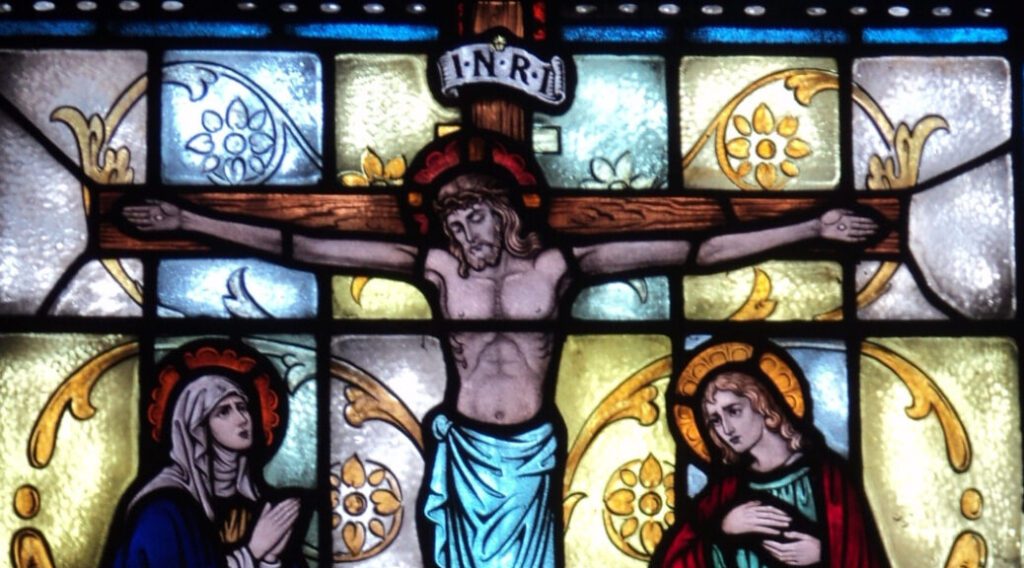
Jesus is known as the second person of God in the Most Blessed Holy Trinity. He is also mankind’s cause and medium through which we find salvation with God the Father and live eternity participating in the life of the Holy Trinity. It is Jesus, being of God’s substance and Divine nature, who assumed human nature in the complete sense of having the composite of human life of both a soul/spirit and body. He lived a perfect human life after emptying Himself of relying on the Divine nature for grace any more than is available as recourse to any other human through prayer and trust in the Father’s Divine Providence. He is God showing us the way through His example in life, through His passion, in death, in Resurrection, in His Resurrection, and through His eternal intercession on our behalf.
The name Christ is best understood as the Church being its body with Jesus as the head. [Col 1:18] It is through Baptism that all Christians become members of the Church and, in turn, members of the Body of Christ. As practicing members of the Church and Body of Christ, Christians surrender themselves to the reign of the head, Jesus. Jesus is “the Way, the Truth, and the Life.” [ John 14:6 ] All of creation was made subject to futility, but not without hope. Jesus, our head individually and of the Church, leads us to be free from sin as children of God. [ cf. Romans 8:20-21 ]
All things were created through Jesus, who existed before all things, and it is through Him all things hold together. [ Cf. Romans 8:16-17 ] It is also through him that all will be reconciled for Him. [ Romans 8:20 ]
The name Jesus, in Hebrew, means “God saves.” [ CCC 430 ] The name Christ is the Greek translation of the Hebrew word Messiah meaning “anointed.” [ CCC 436 ] Jesus was anointed with the Spirit, who is the anointing. It is with this same Holy Spirit that each Christian is anointed at Baptism. The Holy Spirit prepares the Christian as a Temple to receive the conception of Jesus so that we may bear Jesus in both the word and sacrament. Through both, the Christian surrenders to the reign of Jesus as our head.
The question for the Christian to answer is, “Are you responding , in surrender to Jesus our head, His own words, ‘This is my body, I give it up for you.’”
Peace of Jesus in the womb of Mary be with you.
© 2023 Patrick A. O’Donnell All Rights Reserved
MAY 9TH, THE 63RD ANNIVERSARY OF “THE PILL”
May 9, 2023 Patrick A. O’Donnell 20 comments

Above photo: One of the buildings where The Pill was invented in Shrewsbury, MA prior to approval by the FDA on May 9, 1960.
May 9th is such an ordinary day. It is neither a national holiday nor a day of religious significance. It is just another spring day leading toward summer, with green returning to trees and bushes alike, flowers offer their first bloom, and Little League baseball returns to the local diamond. Highlights of the day may include graduation ceremonies at various schools, while ballrooms may include junior and senior proms.
May 9th is also the anniversary of the contraceptive Pill (The Pill), approved as birth control by the United States Food and Drug Administration (FDA). It was invented in Shrewsbury, MA, at the Worcester Foundation for Experimental Biology.The Pill is possibly today’s most prescribed pharmaceutical, while the women prescribed The Pill are also likely the least informed in terms of the effects and dangers of this pharmaceutical. Considering that the Pill has been tried by as many as 94% of women for over sixty years, with them having little forehand knowledge, there has also been meager public discussion on its impact on the culture and its merits or failings.
To an unchallenged populace, The Pill represents control over reproduction with the promise of a better life. It’s timing of invention was some fifteen years after the technology of the atomic bomb was seen as having brought the end of hostilities by Japan without sacrificing many soldiers of the United States and its allies. Technology, it was argued, saves lives. The technological imperative was seen to serve the human imperative.
It seems that for many, only experience with artificial contraception affords the opening of the user’s mind to the disappointments entreated on the user. These disappointments manifest in the body, the emotions, and the spirit. Couples often say that pregnancy changes everything. Artificial contraception changes everything, too, but for the worse, with its distortions of truth.
The failings of artificial contraception are as varied as are the harmful consequences to the human person. These failings can even be deadly. To properly and fully document these failings to the individual by these contraceptives will require time and dedication on this website, going far beyond the scope of a single blog post. Look for follow-ups to come.
It is just as important to consider the resultant structures of sin that have changed a culture striving for a higher humanity where right makes might to the more animalistic might makes right.
Can this be attributed to the adoption and acceptance of artificial contraception alone? It is more likely weak faith formation and the temptation “to be like Gods” that all new technologies manifest is a more likely explanation. [NAB Genesis 3:5]
Experience of sin, such as turning to artificial contraception, can enlighten one to the truth, but usually only after a period of sorting out the consequences of sin:
1) Confusion of the intellect;
2) Malice of will;
3) Disorder of emotions and passions; and
4) Weakness, sickness, and death of the spirit and body.
We, Bearers of the Preborn Christ, believe that full knowledge of artifiical contraception, properly presented, can spare many people from falling into this practice while others may overcome the resulting negative consequences from contraceptive practice with practicing the virtues of:
1) prudence;
2) justice;
3) temperance; and
4) fortitude.
Reliable knowledge of and the distortions of truth associated with artificial contraception to the individual and in culture will be a point of an ongoing study in this blog and website.and death of the spirit and body.
Peace of Jesus in the womb of Mary be with you.
© 2023 Patrick A. O’Donnell All Rights Reserved
THE INCARNATION
March 25, 2023 Patrick A. O’Donnell 42 comments
As I stood on the sidewalk outside an abortion center, I looked at the fetal model in my palm. The fetal model was of a human person at about ten weeks after conception but not of any person in particular. As I gazed at the model, it struck me that this model could be of Jesus, the second person of God, just ten weeks after His conception. The conception of Jesus is known as the Annunciation, when Saint Gabriel appeared to the Blessed Virgin Mary, describing to her God’s plan that she is to bear the world’s Savior.

“He whom the entire universe could not contain was contained within your womb, O Theotokos,”1 with Theotokos being the Blessed Virgin Mary. Jesus shares with each of us the path of the womb. For nine months, Jesus, the Second Person of God, has been confined to the enclosure of the womb. For eternity, in His human nature, He is limited to a human body, albeit now in a glorified human body. While human beings are made in the image and likeness of God, the Divine Jesus consented to taking on the form of a slave2, to come in the likeness of sinful flesh.3 It was in this willingness of Jesus to take on this likeness of the fallen nature of humanity and be obedient to the Father that He condemned sin in the flesh.4
From eternity, Jesus accepted His physical nakedness during His Crucifixion, His birth, and His time in the womb of His mother, Mary. Jesus accepted for Himself the immobility of a late-stage preborn in the womb preparing for labor and delivery. Jesus accepted for Himself the blindness of the early preborn child who was deprived of seeing from the darkness of His womb. Jesus accepted for Himself the near deafness of a preborn person but for muffled sounds of the world outside through the confining walls of His womb. Jesus accepted for Himself the silence of being preborn child who cannot breathe air and speak or cry out. Jesus accepted for Himself the developing body of a preborn person in the fetal stages of eight to forty weeks after conception. Jesus accepted the formless body of a person from conception as a person of a single-cell body to 8 weeks after conception. As read in the Psalms, “You have seen my embryo.”5
“The most radical and elevating affirmation of the value of every human being was made by the Son of God in his becoming man in the womb of a woman, as we continue to be reminded each Christmas.”6
With the vulnerabilities and temptations of being of human nature, Jesus was willing to become man and remain obedient to the Father to redeem an otherwise sinful, disobedient race. Through His Incarnation as man, Jesus lives a sinless human life. He also offers to live every human life as “another Christ”7, if only we would surrender to His trustworthy and holy goodness as expressed as being Christ’s head while we, the baptized of His Church, are Christ’s body.
At His last Supper, and repeated during every Holy Mass, Jesus expressed His love saying, “This is my body which is given for you.”8 Are we willing to own those words as our expression of love to Jesus in offering our life to Him, “This is my body which is given for you.”9 Can “I rejoice in my sufferings for your sake, and in my flesh fill up what is lacking in the afflictions of Christ on behalf of his body, which is the church?”10
On this very day that the Church celebrates the Incarnation of Jesus, we must ask ourselves if we are willing to serve Jesus as a member of the ongoing Incarnation of Christ.
Christian, remember your dignity, and now that you share in God’s own nature, do not return by sin to your former base condition. Bear in mind who is your head and of whose body you are a member. Do not forget that you have been rescued from the power of darkness and brought into the light of God’s kingdom.
Through the sacrament of baptism you have become a temple of the Holy Spirit. Do not drive away so great a guest by evil conduct and become again a slave to the devil, for your liberty was bought by the blood of Christ.11
Peace of Jesus in the womb of Mary be with you.
© 2023 Patrick A. O’Donnell All Rights Reserved
- Taken from the Divine Office of the Feast of the Annunciation of the Blessed Virgin: Matins, II Nocturn, III responsory.
- Philipians 2:6
- Romans 8:3
- Cf. Romans 8:3
- Psalm 139:16(New Jerusalem Bible)
- Saint Pope John Paul II, “Christifidelis Laici”, December 30, 1988, Section #37
- A phrase often used by Caryll Houselander and first read by this author in her book, The Passion of the Infant Jesus,
- 1 Cor 11:24
- 1 Cor 11:24
- Cf. Col 1:24
- From a sermon by Saint Leo the Great, pope. (Sermo 1 in Nativitate: Domini, 1-3: Pl 54, 190-193) Found in the Liturgy of the Readings for Christmas Day. Excerpts from the English translation of The Liturgy of the Hours (Four Volumes) © 1974
THE ORIGIN OF THIS PREBORN CHRIST DEVOTION
March 12, 2023 Patrick A. O’Donnell 46 comments
In the early 1990s, I began to sidewalk counsel abortion-bound mothers and fathers. This outreach offered encouragement, support, and real-life alternatives to the abortion of the person in the mother’s womb, her own child. They are supported, beginning with letting each know that they are not alone in a decision against abortion and keeping their child. This support includes help in medical, financial, housing, and whatever else is needed. The offer to assist in telling the mother’s or father’s parents about this pregnancy is included. This help is available from the sidewalk through to the raising of the child. Referral to pregnancy resource centers is the most often followed-up offer as such places with their professionals can help assess the actual needs and match them with the appropriate means. Such professionals can also help in the counseling of choices to be made for this new family.
One of the goals of outreach on the sidewalk is to provide the mother with a brochure that contains the most salient information and referrals for her to follow up. Often the sidewalk counselor may carry in hand an attractive model of the person in the womb at between 8 to 10 weeks along. This is just as the person’s development has grown beyond the embryo stage to the fetal stage. The model is of actual size and developmental appearance as the person then in the womb. An ultrasound of the mother’s own child has proven to be the most persuasive encouragement to keep her child and to choose against abortion. The fetal model can sometimes be quite effective despite being less than an ultrasound.
One morning in the early 1990s, I stood on the sidewalk outside the Preterm abortion facility in Brookline, MA. I was on the lookout for a mother in need of outreach when I looked down at the model in my hand. I was focusing on how much such a person had already taken on a birthed infant’s bodily appearance even when only 8 to 10 weeks old since conception. This thought was enriched with remembering that, even at this and earlier stages, such a person is made in the image and likeness of God and is worthy of Jesus’s passion and sacrifice. Then occurred a thought that brought me to a moment of awe.
This model is as much a model of Jesus at 8 to 10 weeks as it is of the person in the womb being brought to the abortionist. It was a model of me so many years earlier. It is a model of all of us as God intended at 8 to 10 weeks with Jesus sharing His image and likeness in both his bodily and spiritual nature. The fetal model is of each person, and each is destined to be a member of the Body of Christ with Jesus as Christ’s head. This model was of the Preborn Christ.
Peace of Jesus in the womb of Mary be with you.
© 2023 Patrick A. O’Donnell All Rights Reserved